
When Is a Flatbed Not a Flatbed?
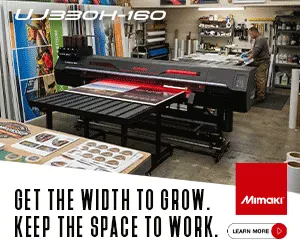
Most roll-to-roll print shops know they could benefit from direct-to-board printing. The challenge is that a traditional flatbed often requires three things many shops don't have:
o The floor space
o The capital budget
o Enough rigid volume to justify a dedicated machine
That's where the UJ330H-160 changes the conversation.
Instead of adding a separate flatbed, the UJ330H-160 gives you roll and rigid capability in one platform, allowing you to bring more rigid jobs in-house while continuing to produce the roll work your business depends on.
Flatbed function, without the flatbed footprint.
The roll-away conveyor tables provide support for rigid media when you need it and give your floor space back when you don't. No permanent flatbed footprint taking over your production area.
Get flatbed impact without the flatbed investment.
For shops currently mounting prints to boards or outsourcing rigid work, the UJ330H-160 can help eliminate extra production steps, reduce labor, improve turnaround times, and keep more margin in-house.
The reality is simple:
If you're printing rigid boards all day, every day, a dedicated flatbed may be the right tool.
But if your business runs on a mix of banners, signs, displays, window graphics, wall graphics, and occasional rigid work, a hybrid is the smarter investment.
One printer. Two revenue streams.
Sometimes the best flatbed isn't a flatbed at all.
It's a hybrid.
We Are Here To Help
No matter the printing or manufacturing need, Mimaki has the solution. We serve a variety of clientele, from big business to startups. If you have questions, reach out! We’d be happy to speak with you.